
The Art of the Long-Term Floor: How Thoughtful Carpet Specification Protects Your Design Vision

When you value-engineer a high-traffic hospitality or commercial interior, the floor is usually the first line item on the chopping block.
Swapping woven Axminster for a less expensive alternative can look like a 6+% savings on your initial bid schedule. But by year five—when heavy rolling luggage, ballroom banquet carts, and high-velocity foot traffic cause delamination, edge fraying, and pile crush—that initial "saving" becomes a replacement bid.
Balancing an initial budget with long-term design integrity doesn't mean compromising your aesthetic intent.
By understanding how carpet construction, fiber physics, and spatial traffic intersect, you can specify with confidence and deliver spaces that look as fresh on year seven as they do on opening day.
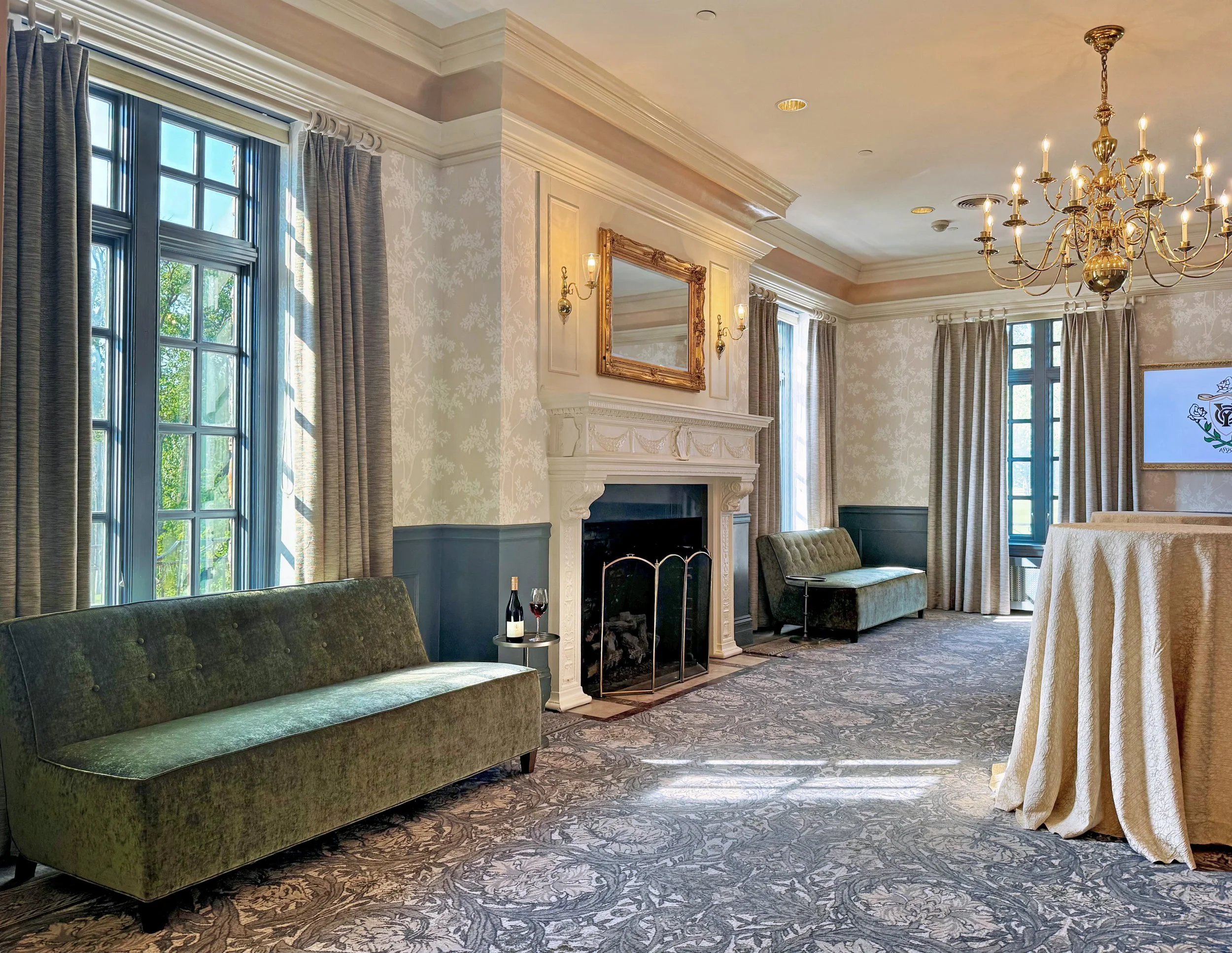
Photos of Country Club of York, designed by Chambers USA
FREE Resource for Specifiers and Owners
Don't let value engineering dilute your design intent. Download our complete technical resource designed specifically for hospitality architects, interior designers, and project specifiers.
Download Royal Thai's 2026 Hospitality & Commercial Flooring Specifying Guide
The Specifier’s Guide to Commercial Carpet: How to Value-Engineer Carpets for Commercial Spaces
Look Beyond Face Weight
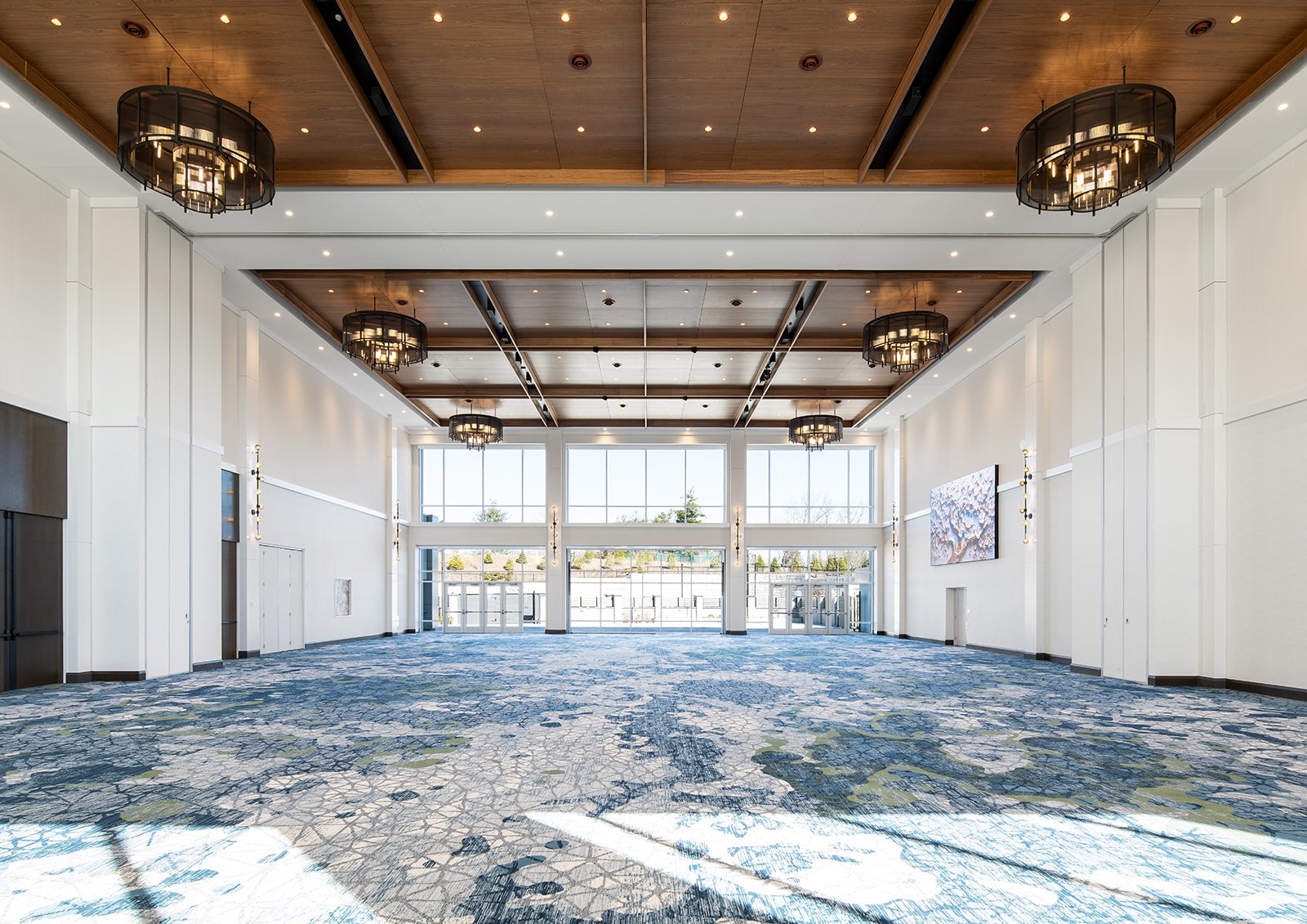
When evaluating commercial carpets, it is easy to rely on face weight as the primary measure of durability. However, weight alone does not tell the full story of how a carpet will perform under heavy rolling luggage and steady foot traffic.
True resilience comes from yarn density, pile height, and structural lock
Measure Value Across the Entire Lifecycle
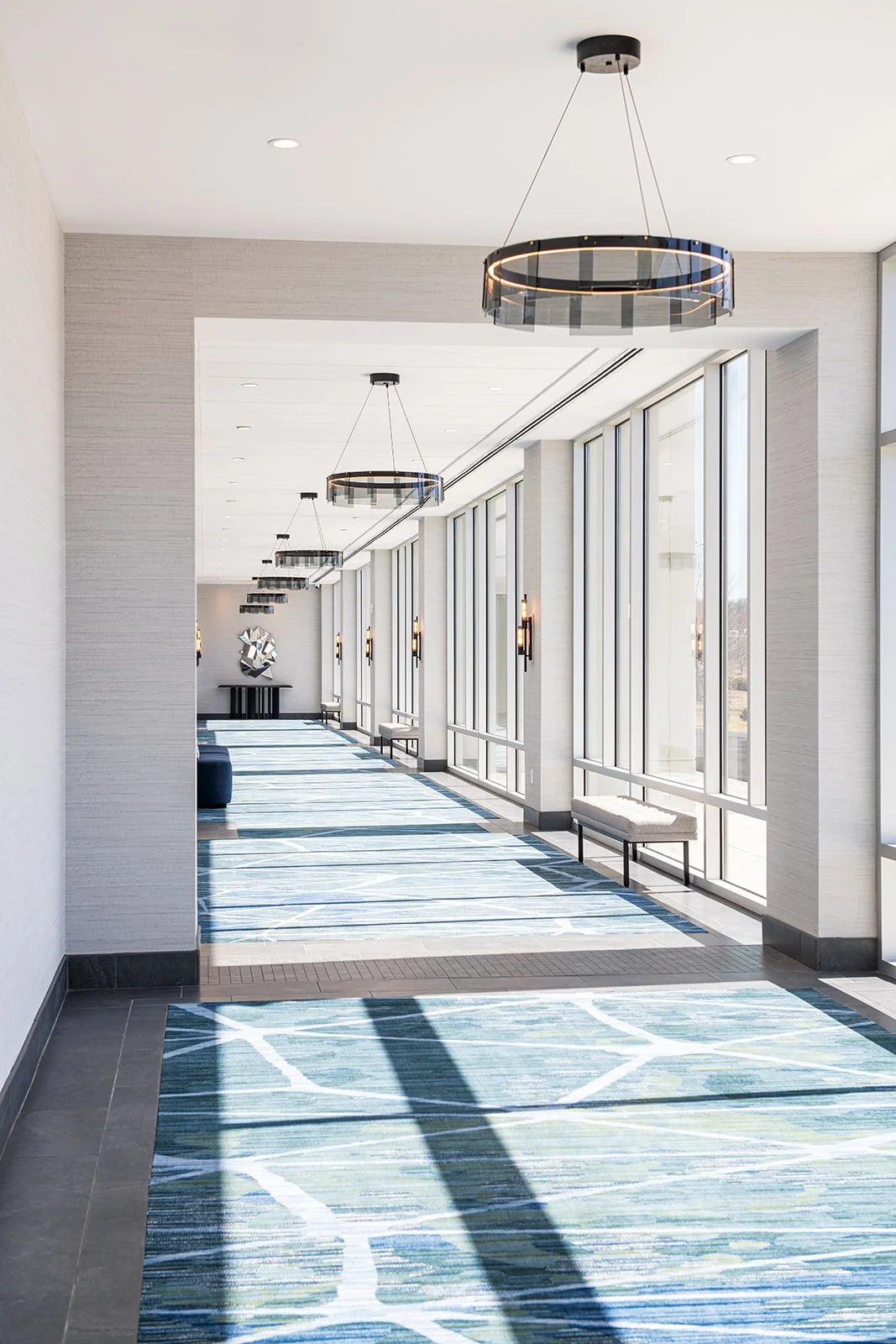
Value engineering is most effective when evaluated through total lifecycle value rather than just initial material bids.
A specification that appears slightly more economical on day one can require earlier replacement cycles, additional labor downtime, and unexpected disruption to hotel operations. When you frame flooring selections around lasting performance, you help owners protect their capital investment while maintaining brand equity through every Property Improvement Plan (PIP) cycle.
Photos of Bristol Event Center, Designed by New Avenue Design Studio
Engineer the Floor to the Space
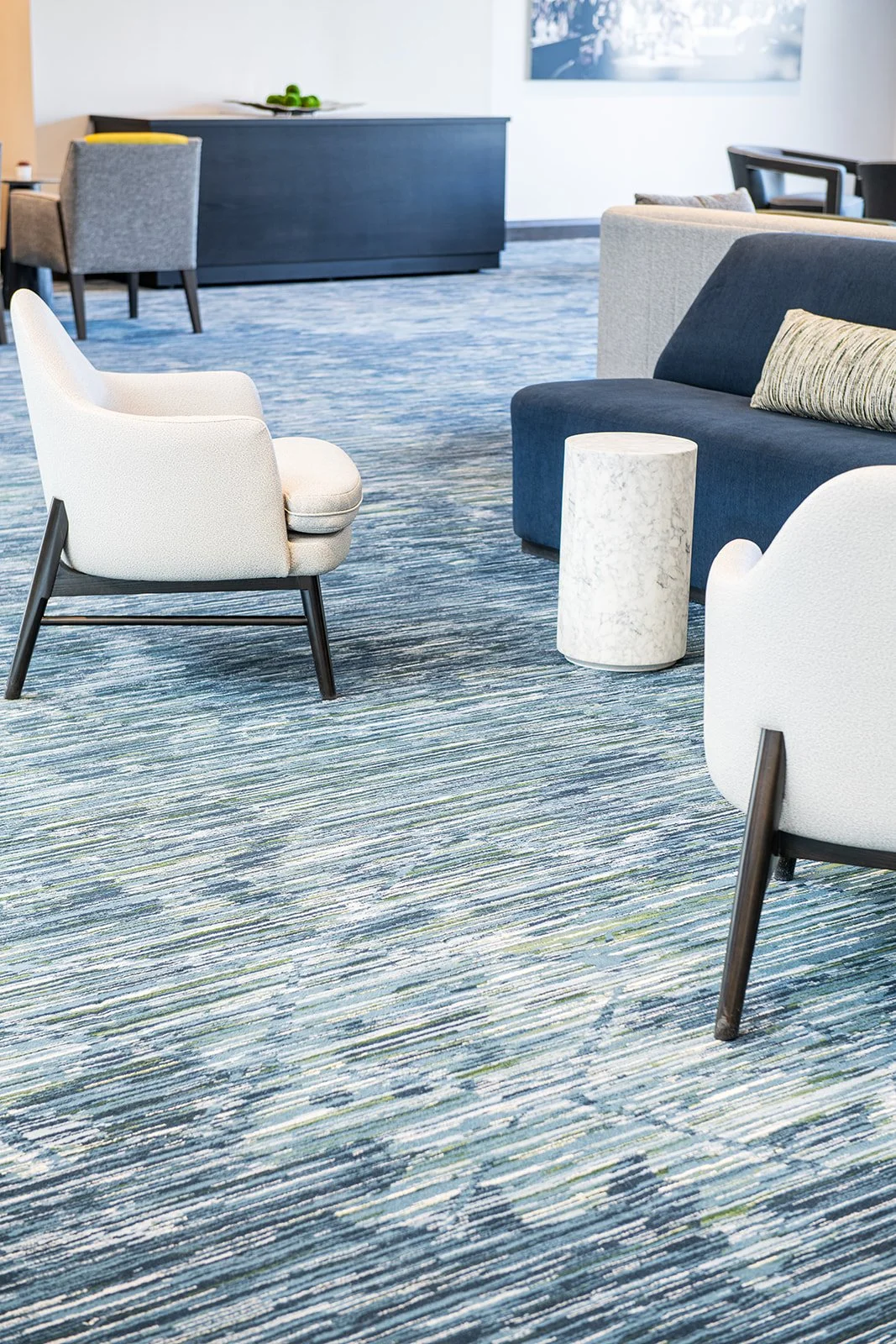
Every zone within a property carries its own functional velocity. A grand ballroom hosting banquet staging demands a different technical foundation than a tranquil guest room corridor or a bustling pre-function foyer.
Aligning pitch, row count, and fiber blends directly to anticipated traffic patterns ensures that your custom colors stay vivid and your patterns remain crisp where they matter most.
Download our Axminster Specifier Guide & Traffic Matrix
Our comprehensive 2026 Axminster Specifier Guide & Planning Matrix gives you the technical roadmap you need to specify with complete confidence.
The Hospitality Traffic Matrix
Exact row counts, pitch recommendations, and construction types across 12 core commercial zones.
Carpet Type Comparisons
A side-by-side technical breakdown evaluating Woven Axminster against CYP, machine-tufted broadloom, and more.
Lifecycle Cost Modeling
Clear, data-backed comparison frameworks to help you present flooring longevity to ownership and brand managers.
Download Royal Thai's 2026 Hospitality & Commercial Flooring Specifying Guide