
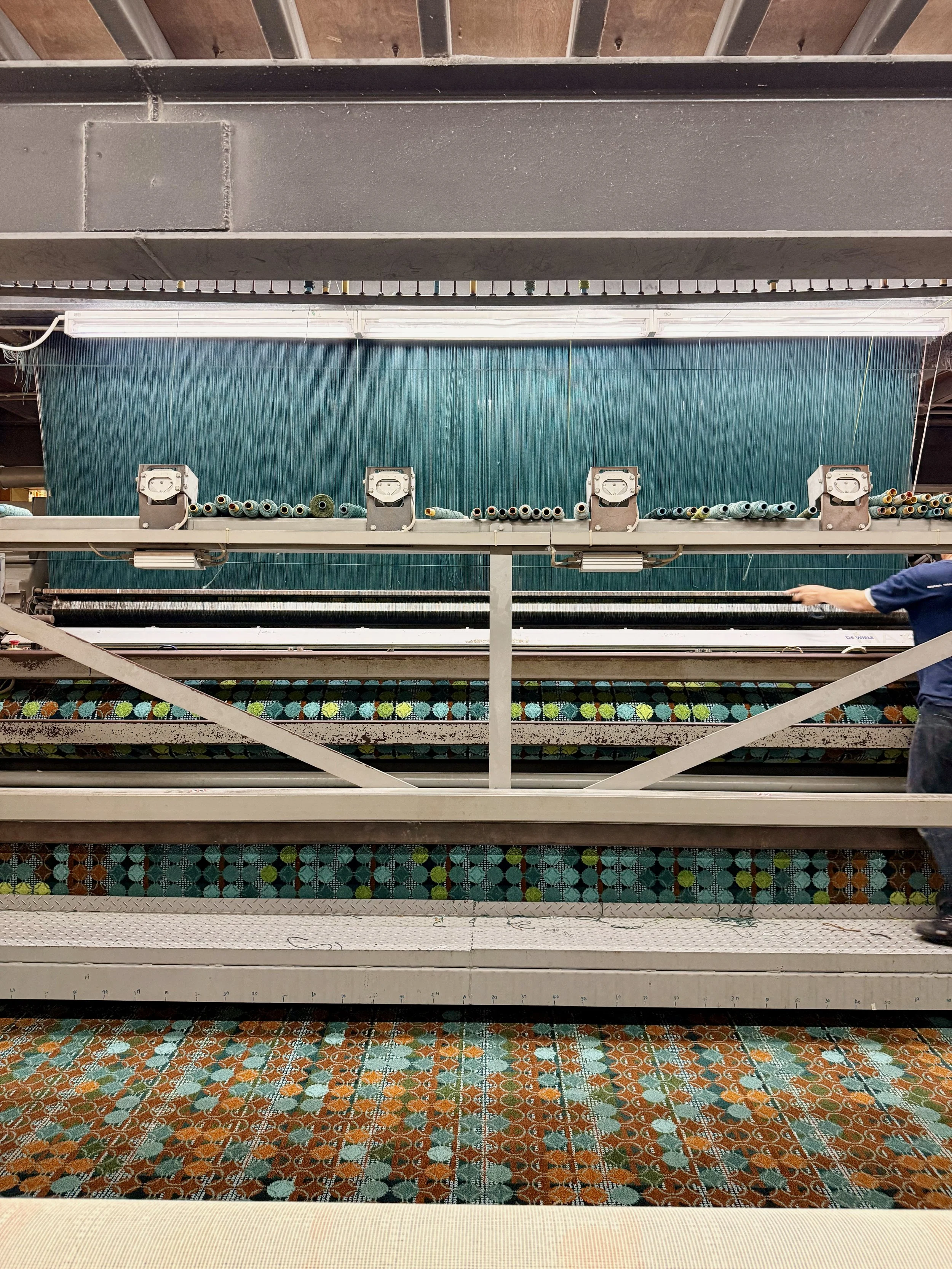
How long a commercial carpet endures comes down to two interdependent decisions: fiber composition and construction architecture. When evaluating commercial flooring, no single material is a universal solution. A floor covering performs at its peak when its physical chemistry and manufacturing method align with the operational realities of the space it occupies. Specify the right combination, and a floor covering will maintain its pattern clarity and structural integrity for decades. Choose the wrong combination, and replacement arrives prematurely, disrupting operations and inflating capital budgets.

Drawing on Royal Thai’s decades of global manufacturing experience across the world's most demanding hospitality and entertainment venues, this guide provides commercial interior designers, architects, owners, and purchasing agents with a practical framework for evaluating commercial carpet specifications. We examine the industry's primary fiber profiles and dominant construction methods, detailing how strategic fiber blending, vertical manufacturing control, and targeted construction selection ensure lasting performance across every zone of a property.
Carpet Durability in Commercial Spaces: A Specifier’s Guide to Fibers, Construction, and Performance
Table of Contents
The 5 Core Evaluation Criteria
The 6 Shortlisted Carpet Fiber and Construction Profiles
Woven Axminster Broadloom (80% Wool / 20% Nylon)
Modular Woven Axminster Tiles (80% Wool / 20% Nylon)
100% Wool in Hand Tufted and Luxury Machine Tufted
Solution-Dyed Nylon
Recycled Polyester / PET
Polypropylene
Master Performance, Safety, and Acoustic Specification Matrix
The “Lobby to Guestroom” Procurement Model
Frequently Asked Questions

Traffic Tolerance: Does the surface maintain its tuft definition, pile height, and pattern clarity under continuous pedestrian traffic and heavy rolling loads, such as bell carts and service trolleys?
Stain and Soil Management: Does the fiber release daily dry soil during vacuuming, resist liquid spills, and respond effectively to standard commercial extraction without degrading the pile?
Structural Integrity Over Time: How well does the carpet resist crushing, edge fraying, backing delamination, and pile loss across a realistic 8-15 year hospitality renovation cycle?
Sustainability Credentials: Does the material support environmental goals through renewable resources, post-consumer recycled content, reduced manufacturing footprints, and low-VOC indoor air quality certifications?
Fit by Space Type: Is the material suited to the specific operational demands of the room—whether that is a high-impact ballroom, an active casino gaming floor, a quiet guestroom, or a corridor?
The 5 Core Evaluation Criteria
To build a defensible specification that satisfies design ambition, operational demands, and financial review, every floor covering should be measured against five criteria:
Woven Axminster
80% Wool / 20% Nylon
Construction Architecture: Electronic Jacquard Woven Axminster (True Woven Interlock)
Best Suited For: High Traffic areas: hotel lobbies, grand ballrooms, convention centers, pre-function areas, corridors, guest room rugs, meeting spaces.
The Engineering Behind the 80/20 Blend:
Rather than relying on a single fiber, the global hospitality standard relies on an engineered blend of 80% wool and 20% nylon. This ratio balances the natural properties of two distinct wool origins with high-tenacity synthetics:
British Wool: Sourced from sheep raised in rugged, colder climates, British wool possesses a coarse, heavily crimped fiber structure. This crimp acts as a microscopic three-dimensional spring, providing bulk, compressive strength, and recovery against foot traffic.
New Zealand Wool: Known for its low vegetable matter and clean white cast, New Zealand fleece accepts dye with high saturation, providing the color clarity needed for complex, multi-tonal motifs.
Nylon 6,6 Structural Reinforcement: The 20% synthetic addition provides high tensile strength. Spun with Nylon 6,6—which has a higher melting point and tighter molecular structure than standard Nylon 6—it prevents fiber tips from shedding or melting under the frictional heat generated by heavy, rolling luggage wheels.
Performance Against Core Criteria:
Traffic Tolerance: Very High. Retains its pattern clarity and pile height under continuous foot traffic and heavy rolling loads.
Stain and Soil Resistance: High. The microscopic scales of natural wool scatter light to conceal soil, while its natural wax membrane (lanolin) repels waterborne spills long enough for custodial staff to blot them clean.
Structural Integrity Over Time: Exceptional. Woven Axminster routinely achieves a 10-15-year working lifespan without edge fraying or pile collapse.
Sustainability: High. The 80% natural wool component is renewable and biodegradable. Royal Thai’s vertically integrated manufacturing facility incorporates closed-loop wastewater recycling and solar generation to minimize the loom-to-site environmental footprint.
Commercial Investment Profile:
Woven Axminster requires a higher initial expenditure than tufted alternatives. However, over a 15-year lifecycle, its total cost of ownership is lower; it avoids the mid-cycle replacement, operational disruption, room closures, and landfill disposal costs associated with short-cycle products.
2. Modular Axminster Tiles
80% Wool / 20% Nylon
Construction Architecture: Precision-cut woven Axminster face bonded to a dimensionally stable cushion tile backing
Best Suited For: Casino gaming floors, high-traffic entertainment venues, and spaces requiring a flexible layout.
About Modular Axminster
Modular Axminster combines the structural luxury and design possibilities of an 80/20 Jacquard weave with the operational advantages of a modular tile format.
Performance Against Core Criteria:
Fit by Space Type: High-intensity venues like casino floors require the visual depth and soil-hiding capabilities of woven Axminster, yet they face localized beverage spills in high-traffic paths and require continuous access to underfloor data and power trenches. Modular Axminster resolves this operational conflict.
Traffic Tolerance: Very High. Handles both heavy pedestrian crowds and rolling equipment carts without showing directional wear paths.
Structural Integrity Over Time: Very High. Individual tiles remain flat on the subfloor without cupping, doming, or edge curling.
Operational Maintenance: When severe damage occurs—such as a deep burn or chemical spill—facilities teams can lift and replace individual tiles in minutes, returning the floor to service without closing down entire gaming sections or corridors.
Commercial Investment Profile:
Carries an upfront cost comparable to woven Axminster broadloom, but reduces ongoing operating expenses by minimizing replacement attic stock and avoiding phased floor shutdowns during maintenance cycles.
3.0100% Wool
Hand Tufted or
Machine Tufted
100% Wool
Construction Architecture: Artisan Hand Tufted or Dense Cut-and-Loop Machine-Tufted
Best Suited For: Lobbies, Suites, VIP lounges, executive boardrooms, and boutique luxury feature areas.
About 100% Wool Products
In bespoke hospitality spaces, the sensory experience underfoot directly reflects the property's brand positioning. Hand tufting allows highly trained artisans to manually weave wool yarns into stretched canvas backings, accommodating multi-level cut-and-loop textures, intricate hand-carving, and yarn weights.
Luxury machine-tufted 100% wool leads by pairing the tactile richness, inherent soil-shedding, and acoustic dampening of wool with high-precision gauge control, delivering custom luxury at commercial scale and reliable production lead times.
Performance Against Core Criteria:
Traffic Tolerance: Moderate. While wool's helical protein structure provides spring-back under footfalls, pure wool lacks the synthetic tensile reinforcement required to handle heavy, continuous rolling luggage traffic without some surface fuzzing.
Stain and Soil Resistance: High. Inherent soil-shedding properties keep fibers looking fresh in conditioned indoor environments.
Structural Integrity Over Time: High in dedicated applications. Backed with latex and canvas backing, hand tufted wool installations maintain their structural profile when protected from extreme traffic and improper wet cleaning.
Sustainability: Exceptional. 100% natural, rapidly renewable, and biodegradable. Free from petroleum-derived compounds, it supports low-emitting, health-focused building standards.
Commercial Investment Profile:
The highest initial cost per square yard among commercial floor coverings. It is best suited to experiential investments in exclusive spaces where tactile comfort, acoustics, and design artistry are central to the guest experience.
4.0Solution Dyed Nylon (SDN)
100% Nylon
Primary Composition: 100% Nylon
Construction Architecture: Machine Tufted (Cut Pile, Level Loop, or Multi-Level Loop Broadloom and Tiles)
Best Suited For: High-traffic areas: High-traffic guest corridors, airport terminals, or other high-traffic areas.
About Solution Dyed Nylon (SDN)
Nylon remains the standard for durability among synthetic carpet fibers. Its molecular structure provides high elastic recovery, resisting the crushing and matting that can affect softer synthetics under continuous foot traffic.
Performance Against Core Criteria:
Traffic Tolerance: Very High. Nylon rebounds after compression, maintaining its appearance across busy circulation routes.
Stain and Soil Resistance: Very High. When solution-dyed—meaning the pigment is infused into the molten polymer before the yarn is extruded—the color is an integral part of the fiber. It resists harsh chemical spotting and fading from sunlight exposure.
Structural Integrity Over Time: Moderate to High. Because tufted carpet depends on a latex adhesive to secure the yarn into the primary backing, extended exposure to rolling loads can eventually lead to backing breakdown or edge fraying over long cycles.
Sustainability: Moderate. As a petroleum-derived material, its sustainability credentials depend on post-industrial and post-consumer recycled content programs and closed-loop reclamation initiatives.
Commercial Investment Profile:
Moderately priced, sitting between polyester and woven wool blends. It provides a reliable balance of upfront and multi-year durability in demanding circulation spaces.
5.0Recyled Polyester, PET
100% Polyethylene
Construction Architecture: Machine-Tufted on Modular Cushion or Hardback Tiles
Best Suited For: Hotel guestrooms, multi-family corridors, and moderate-traffic environments.
About Polyester
Polyester is inherently hydrophobic. Its closed-cell molecular structure does not absorb moisture, making it naturally resistant to waterborne stains and liquid penetration without relying heavily on topical chemical treatments.
Performance Against Core Criteria:
Sustainability: High. Modern PET carpet manufacturing frequently diverts post-consumer plastic bottles from landfills. Specifying PET tiles backed by cushion systems like EcoSoft® provides verifiable landfill diversion data, supporting LEED and regional green building certifications.
Stain and Soil Resistance: High. Spills sit on the surface of the fiber, allowing for straightforward cleanup in dining areas and guestrooms.
Traffic Tolerance: Moderate. PET lacks the molecular spring-back of nylon or wool. Under sustained rolling loads or heavy static furniture, its pile can crush over time.
Fit by Space Type: Performs best in distributed-wear spaces like guestrooms, where traffic is spread across the floor rather than concentrated in narrow circulation paths.
Commercial Investment Profile:
Lower to mid-tier upfront investment. It offers a practical option for projects seeking an accessible price point and strong recycled-content documentation in moderate-wear environments.
6.0Polypropylene
100% Polypropylene
Construction Architecture: Low-Profile Level Loop or Needle-Punch Broadloom
Best Suited For: Purely utilitarian, back-of-house areas such as maintenance rooms, service corridors, and storage.
About Polypropylene
Polypropylene is chemically inert and completely moisture-resistant, allowing it to withstand direct cleaning with bleach-based solutions without losing color. However, it possesses a low melting point and weak elastic memory; friction from dragged luggage or wheeled carts easily causes surface burns, and pile crush occurs rapidly under foot traffic. Additionally, its chemistry attracts oily soils. Polypropylene is not recommended for guest-facing hospitality environments and serves solely as an entry-level utility benchmark.
Master Specification Matrix
Traffic Tolerance
Stain & Soil Management
Structural Integrity over Time
Fire Standards
Optimal Fit by Space Type
Fiber & Construction
Very High
High
Exceptional
ASTM E648: Class 1
ASTM E662: D8
Grand lobbies, ballrooms, public pre-function spaces, casinos.
80/20 Axminster Broadloom
Very High
High
Exceptional
ASTM E648: Class 1
ASTM E662: D8
ASTM E648: Class 1
ASTM E662: D8
Casino gaming floors, high-traffic corridors needing underfloor access.
80/20 Modular Axminster Tiles
Moderate
High
High
ASTM E648: Class 1
ASTM E662: D8
Presidential suites, VIP lounges, fine dining salons, executive boardrooms.
100% Wool Hand Tufted / Machine Tufted
High to Very High
Very High
Moderate to High
ASTM E648: Class 1
ASTM E662: D8
Main hotel corridors, open offices, airport concourses, convention centers.
Solution Dyed Nylon (SDN)
Back-of-house corridors, staff areas, administrative storage.
Moderate
Low to Moderate
Very High
High
Moderate
Low to Moderate
ASTM E648: Class 1
ASTM E662: D8
Hotel guestrooms, multi-family corridors, projects targeting recycled content.
PET
PET
The “Lobby to Guestroom” Procurement Model
Historically, specifying a comprehensive commercial property required juggling multiple manufacturers: one mill for public-space woven Axminster, another for tufted guestroom carpet, and a third for modular utility tiles. This fragmented sourcing introduces operational friction:
Visual Disconnects: Subtle mismatches in yarn luster and dye-lot variations across spatial transitions.
Logistical Complexity: Disjointed delivery timelines, split ocean freight containers, and competing installation schedules.
Warranty Fragmentation: Dispersed accountability when maintenance issues arise across product boundaries.
How Royal Thai Solves
Those Challenges

As a vertically integrated manufacturer, Royal Thai oversees the entire production process from its dedicated facilities. Raw wool blending, yarn spinning, dyeing, electronic Jacquard weaving, machine tufting, and modular cushion backing are managed under one roof.
This model allows project teams to coordinate a cohesive design narrative across the entire property:
Public Grandeur: Custom 80/20 woven Axminster broadloom for grand lobbies and ballrooms.
Dynamic High-Traffic Zones: 80/20 modular Axminster tiles for gaming floors and active corridors.
Executive Luxury: Bespoke 100% wool hand tufted rugs for VIP suites and executive spaces.
Operational Performance: Recycled-content EcoSoft® modular tiles for guestrooms and private workspaces.
By pairing bespoke design with verifiable sustainability—such as using 100% recycled water, generating 40% of production energy from solar arrays, and diverting millions of plastic bottles from landfills into EcoSoft® felt backing—designers can fulfill their aesthetic vision while meeting strict ESG and operational requirements.
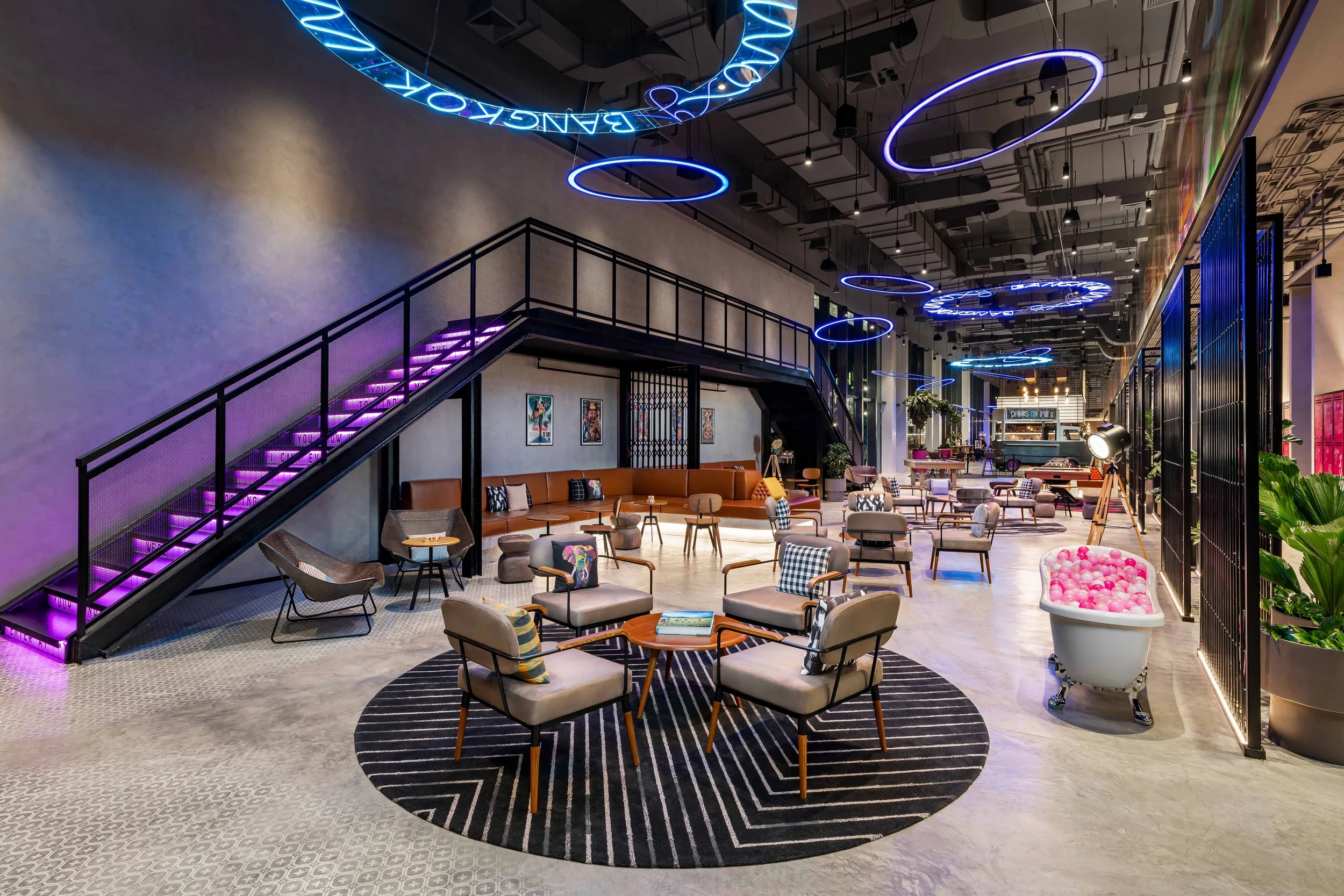
Picture Above: The Moxy Bangkok
Frequently Asked Questions
-
While 100% nylon is durable, it is a synthetic polymer that can develop static, show surface sheen, and display tracked-in soil more readily.
The 80/20 blend utilizes the natural opacity and microscopic scales of wool to disperse light, which naturally conceals soil. Wool also provides a springy, comfortable feel underfoot that synthetics cannot fully replicate. The 20% Nylon 6,6 component provides the necessary tensile strength to resist fiber breakage from rolling luggage wheels.
-
Choose Axminster broadloom when a project requires an uninterrupted, large-scale architectural pattern across expansive public spaces like ballrooms.
Choose Modular Axminster when that same woven luxury is required in high-intensity operational environments that experience unpredictable localized spills or require continuous access to underfloor data cables, such as casino floors and busy circulation routes. -
Wool performs well in luxury hospitality applications with moderate traffic — suites, VIP lounges, private dining rooms. It is not typically specified for main corridors or casino floors. Sustained heavy traffic in those zones demands the crush resistance of nylon or a woven construction platform.
-
Yes. An integrated manufacturer can supply both Axminster for public areas and carpet tiles for guestrooms. Royal Thai does exactly that. It simplifies procurement, ensures design continuity, and removes the need to manage multiple flooring suppliers across a property.
-
Yes. Natural wool and 80/20 wool-nylon blends inherently satisfy ASTM E648 / NFPA 253 Class 1 critical radiant flux standards and ASTM E662 smoke density requirements without topical chemical coatings. Wool has an ignition temperature of approximately 600°C, a high Limiting Oxygen Index, and an inherent tendency to char rather than melt, preventing flame propagation.
-
Face fiber primarily absorbs airborne sound (Noise Reduction Coefficient, or NRC), reducing room reverberation and speech chatter. Impact sound transmission, such as footsteps or rolling luggage rumble, travels mechanically into the floor slab.
While direct-glued broadloom offers baseline acoustic dampening, installing 80/20 Axminster over a commercial underlay or specifying modular tiles with an engineered acoustic cushion backing (such as EcoSoft®) traps vibrating sound waves in microscopic air cavities, achieving impact sound reductions of up to 34 dB.