Botánica by Mojo & Muse, The Untold Journey to get to The Met
Every collection begins somewhere.
For Botánica, it began at The Met.
An Evening at The Met
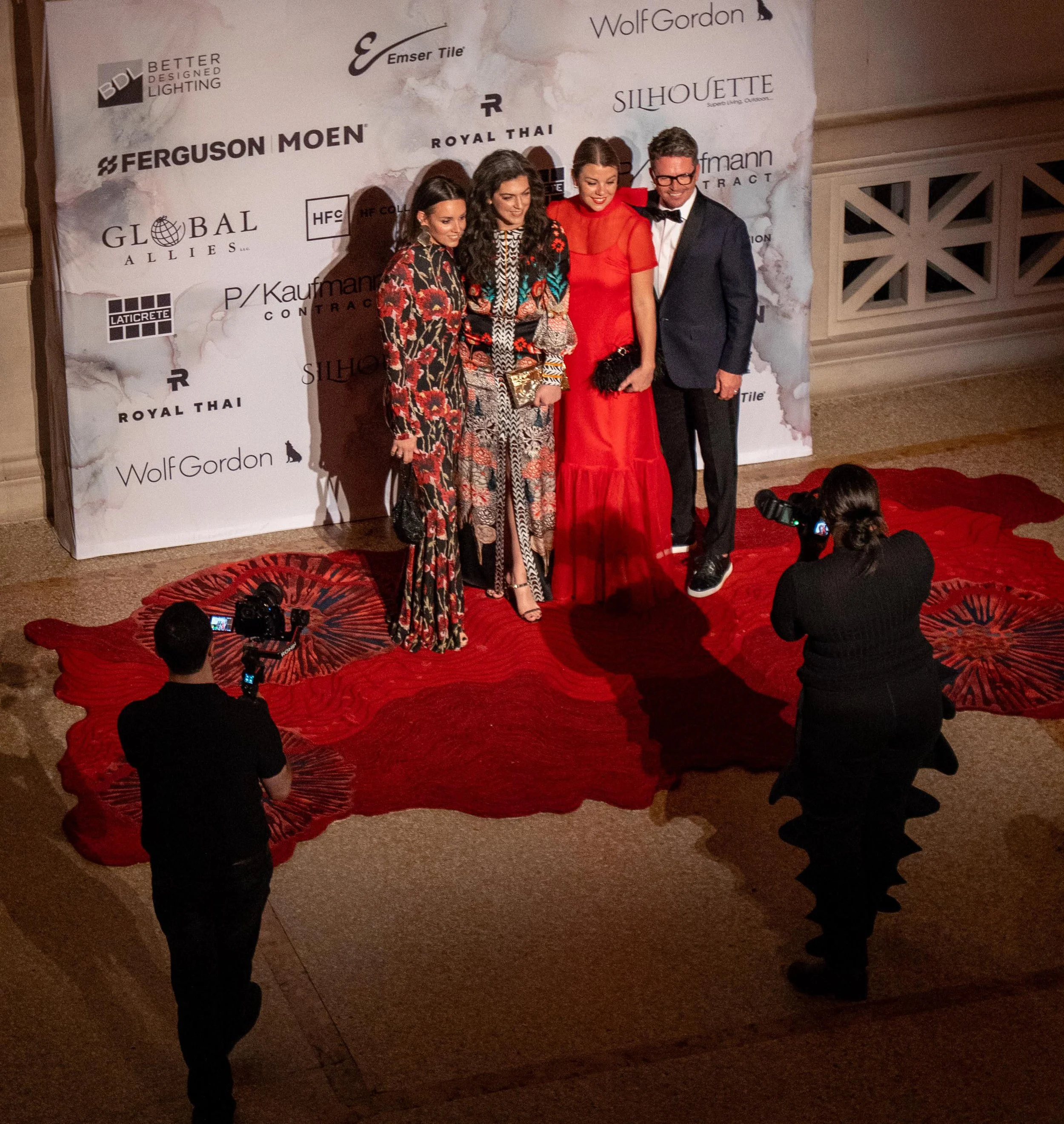
An Evening at The Met was a collaborative effort between Royal Thai, BDL, Emser, Ferguson, Global Allies, HFC, Laticrete, Moen, Silhouette, Pkaufmann, and Wolf Gordon in November 2025.
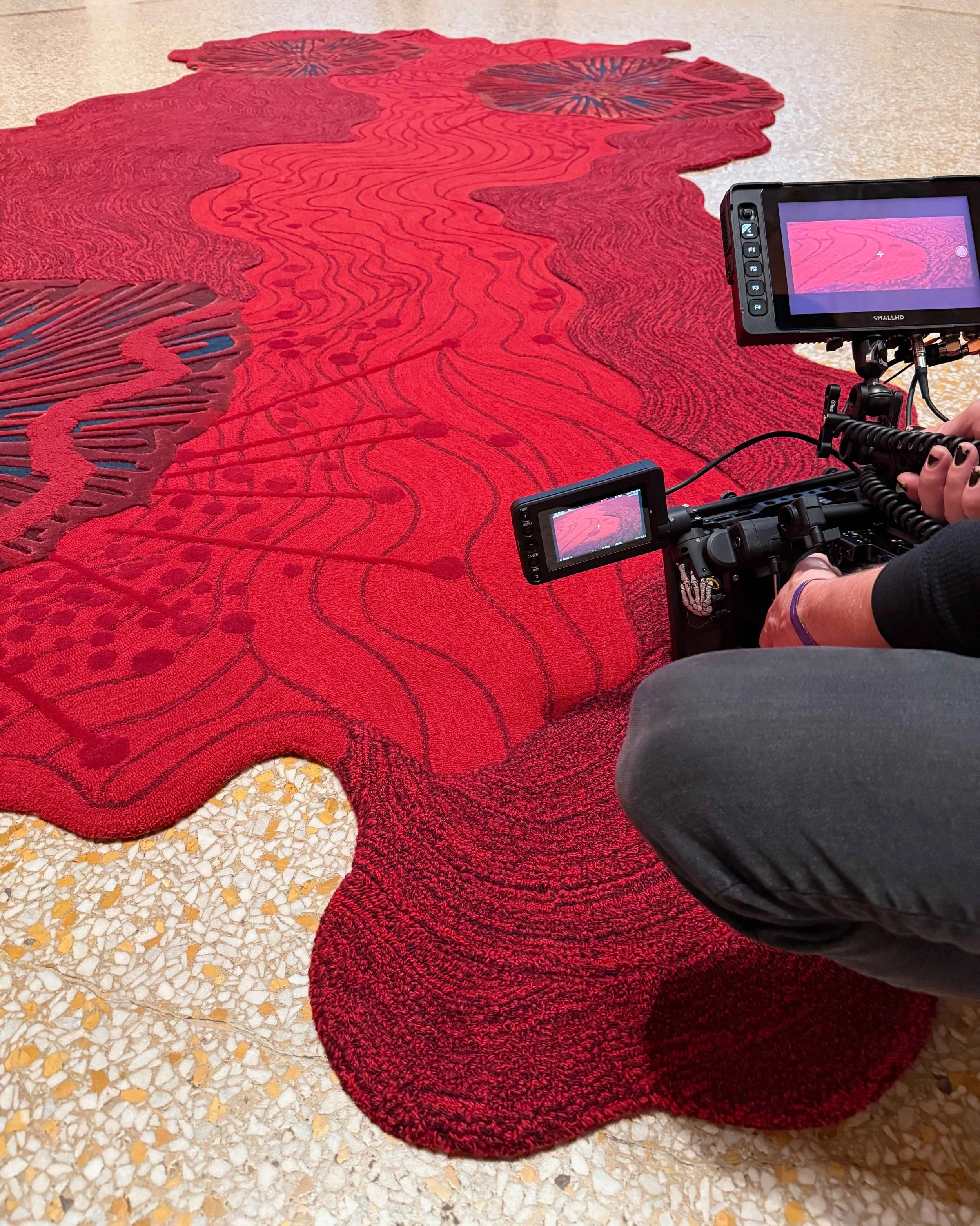
Royal Thai was tasked with providing the red carpet for the event—Royal Thai x Mojo & Muse at the Met emerged.
Designing Beyond the Canvas
There is a distinct, quiet vulnerability in showcasing the pieces that didn’t make it.
As creators, we are conditioned to present only the flawless final product—the gleaming rug under museum spotlights, the immaculate layout in a glossy brochure. But standing within the legendary, echoing halls of the Metropolitan Museum of Art for an exclusive industry gathering, surrounded by hundreds of our peers, a profound realization hit us.
The true magic of our latest collaboration, Botánica with Manoela Grigorova of Mojo & Muse, wasn’t just the final, breathtaking carpet on display beneath the museum's historic arches. It was the discarded yarn poms, the "almosts," and the rejected samples left behind at our studio floor that actually got us there.
To have your work step inside The Met is to enter a dialogue with history. Here is the truth of what it takes to translate fine art into a high-performance hospitality reality on one of the world's grandest stages.
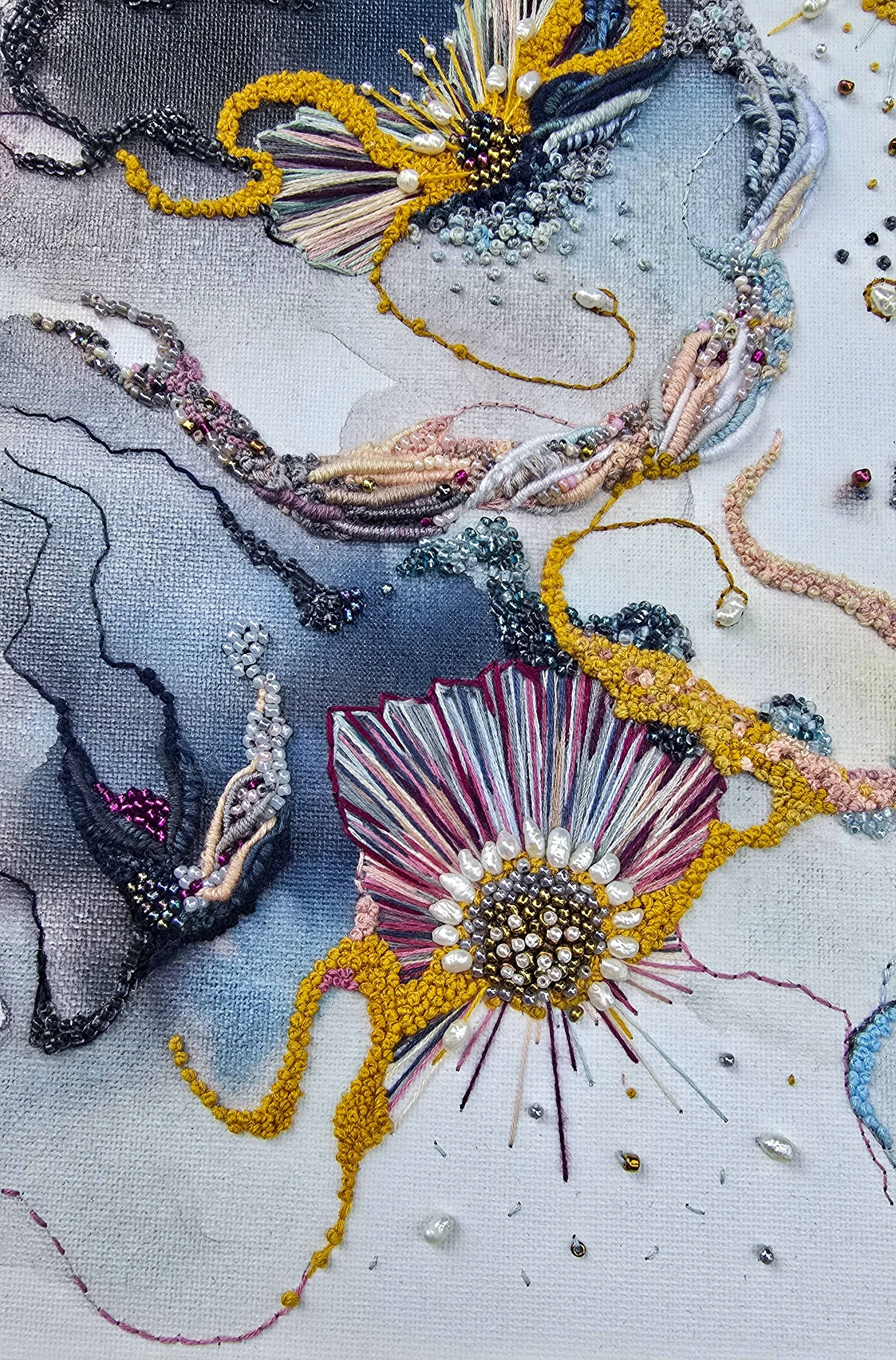
The Convergence of Two Creative Worlds
Every artist, no matter their medium, knows the paralyzing weight of the blank page. It is a space of infinite potential, but also infinite doubt. When you are tasked with creating something worthy of an institution like The Met, that blank space feels even more intimidating. You aren't just designing floor covering; you are trying to capture a fleeting moment of human connection and anchor it to a physical foundation.
This process requires an immense amount of mutual trust. From the very beginning, we navigated the creative trenches with Manoela, balancing every single iteration, design tweak, and color change against her original artistic intent.
In the digital age, we are often forced to review art on cold, flat screens. But hand tufted design is a living, tactile medium. It is incredibly difficult to truly perceive the depth and dimension of a carpet through a digital rendering. We had to trust each other's instincts across the digital divide, holding on to the truth that the magic would reveal itself once we could translate those online concepts into a tangible, physical form.
“The flow is great but lets be careful not to make it too regular, especially the stitch lines, keep it irregular. The same with the flowers, lets edge them with some sharp edges rather than too flowy flowy. I've also added snapshots of my flowers and lines, lets keep them edgy if we can.”
—Example feedback from Mojo & Muse throughout the design process
Pom Selection
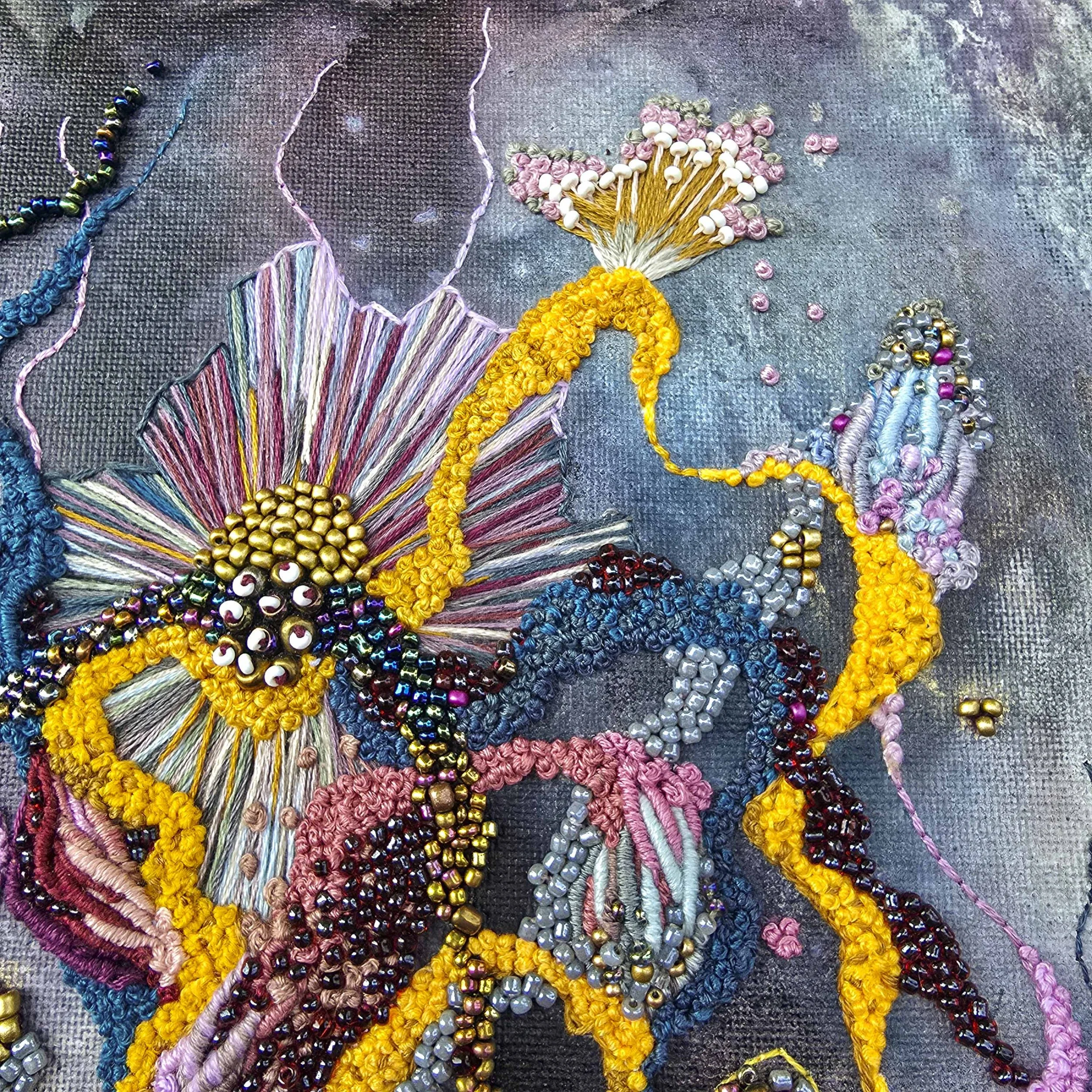
Every carpet in the Botánica collection began its life not as a blueprint, but as an alcohol ink painting. Manoela’s original artwork relies on the unpredictable, bleeding gradients of inks juxtaposed with tightly wound stitches, French knots, and glistening beads.
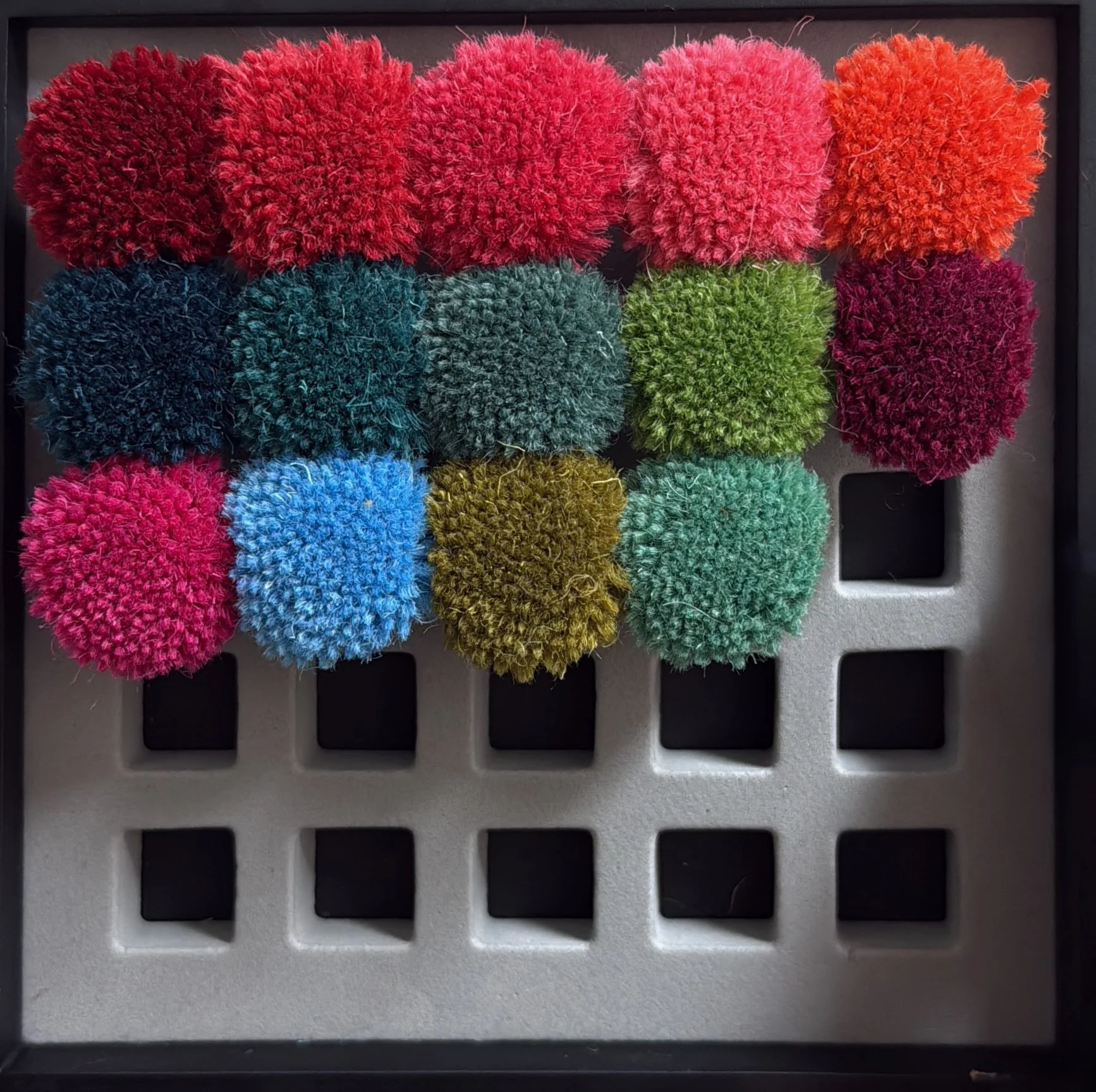
Our first challenge was translation—we knew this specific carpet needed to command the room, standing entirely apart from the rest of the collection's standard color palette. We dove deep into our yarn poms, curating a bespoke, emotional selection of deep reds, blush pinks, and dramatic crimson tones specifically chosen to complement the night's visual theme.
But truth be told? We didn’t get it right the first time. Or even the second.
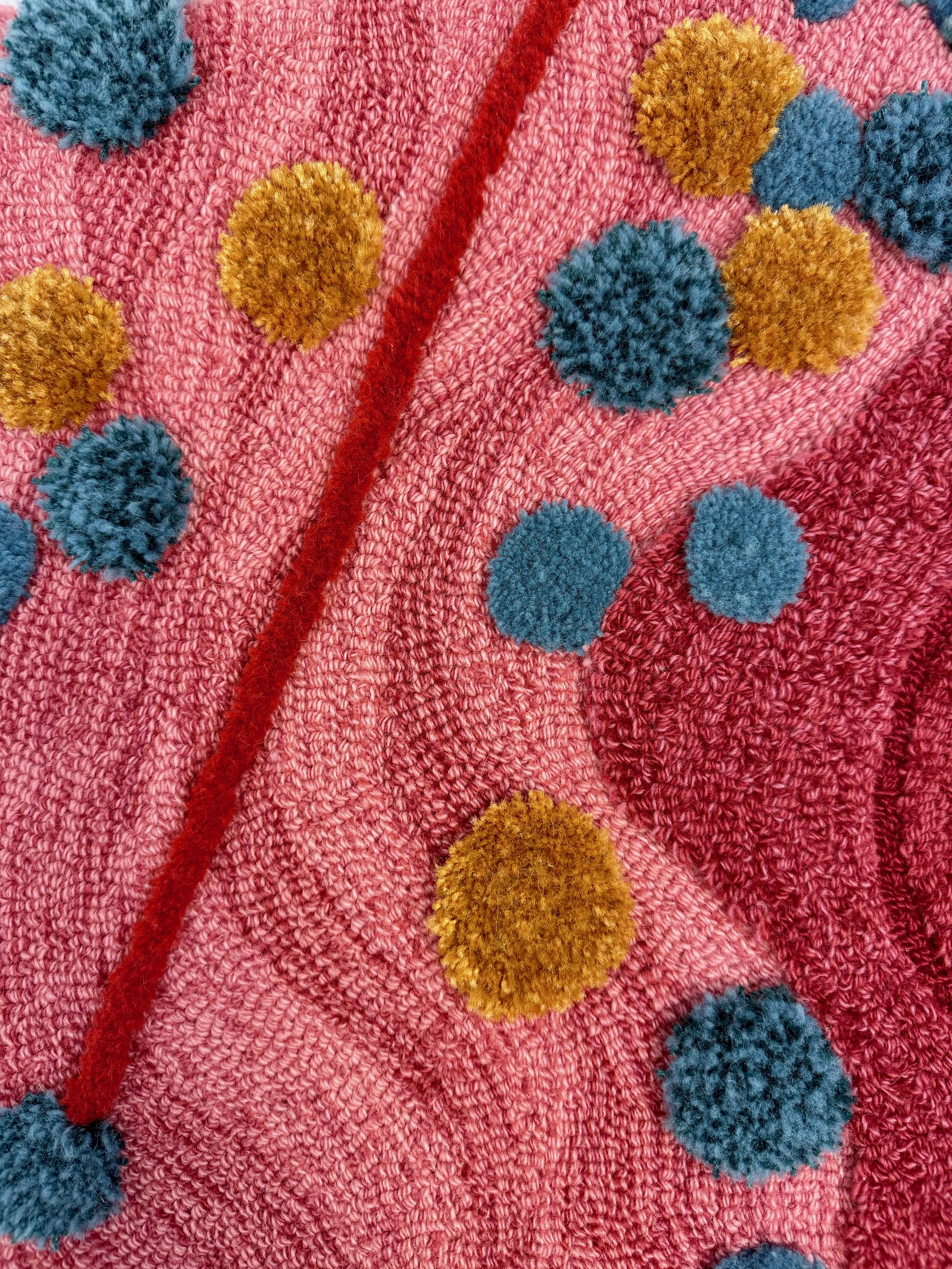
Our initial samples came back lacking the artistic warmth and emotional pulse of Manoela's original artworks. We had to pivot, reassess our color choices, and resample. This is part of the creative process: on a screen, a color can make perfect sense, but it can take the physical sample to finally discover the harmony that captures the ultimate vision.
*The pictured samples were specific to this project and cannot be duplicated or replicated.
The Design Hurdles
Hand tufting gives us immense structural freedom, but hospitality design demands strict, uncompromising real-world performance. This is where our artistic dreams met the reality of public spaces.
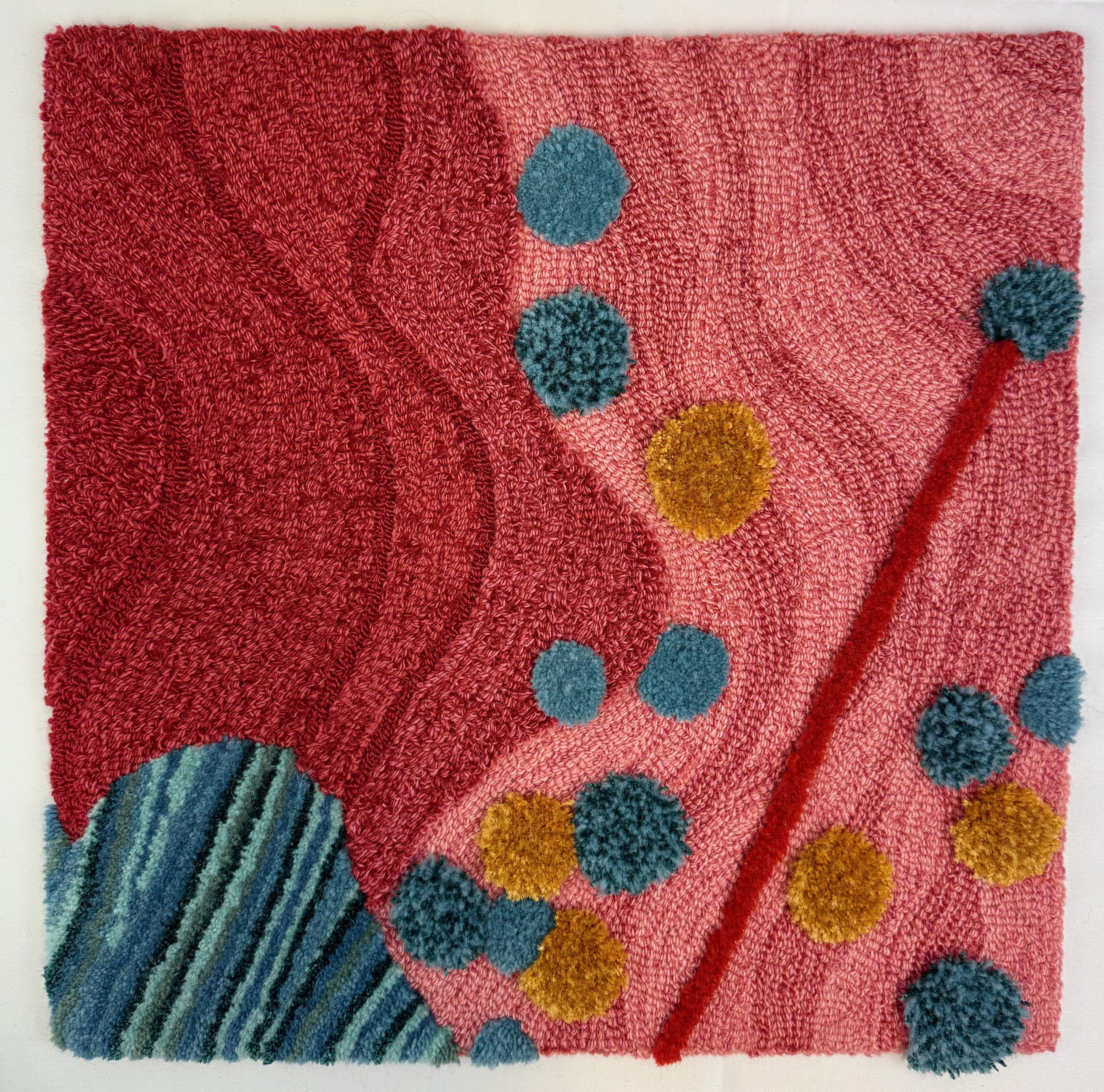
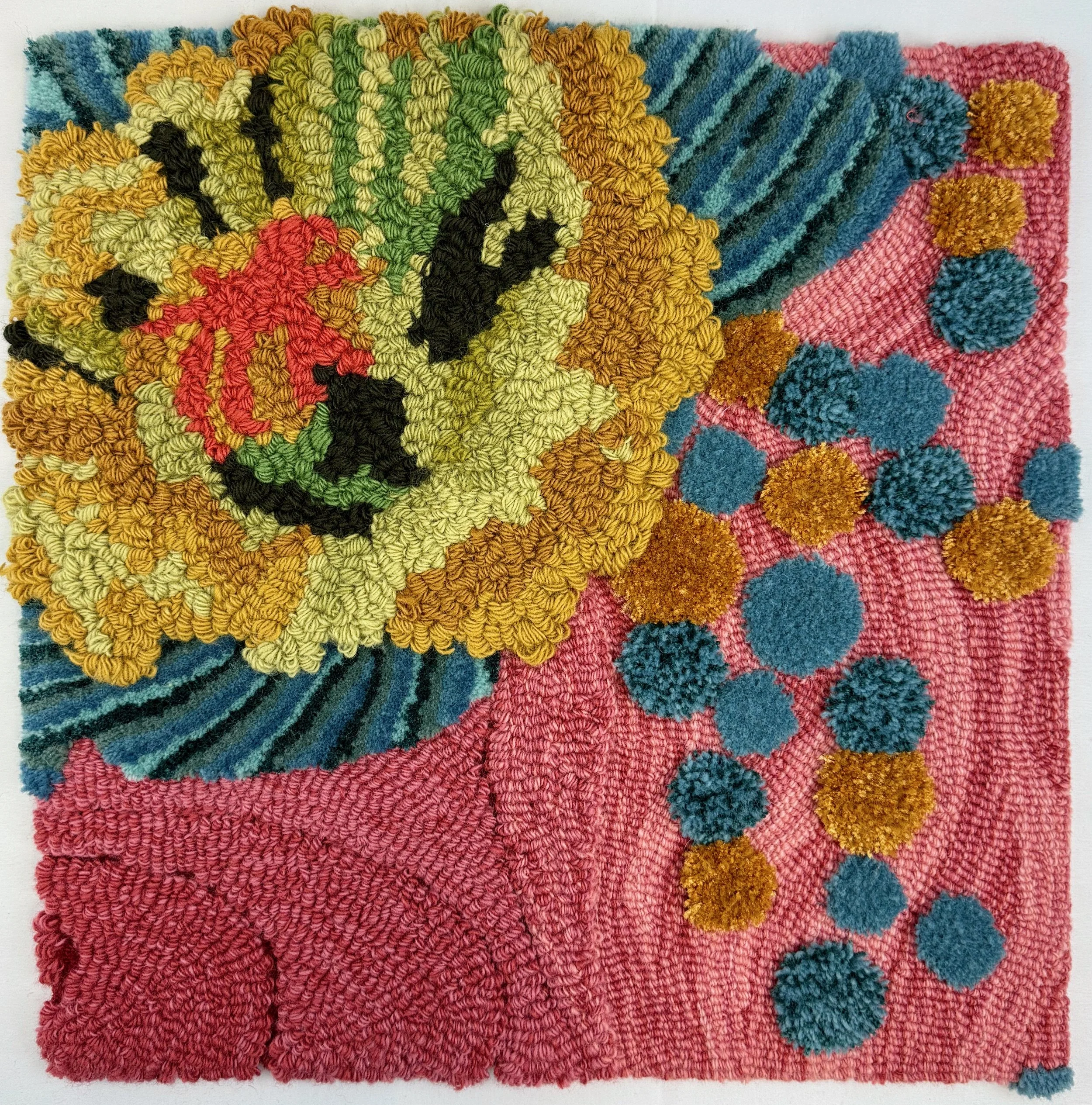
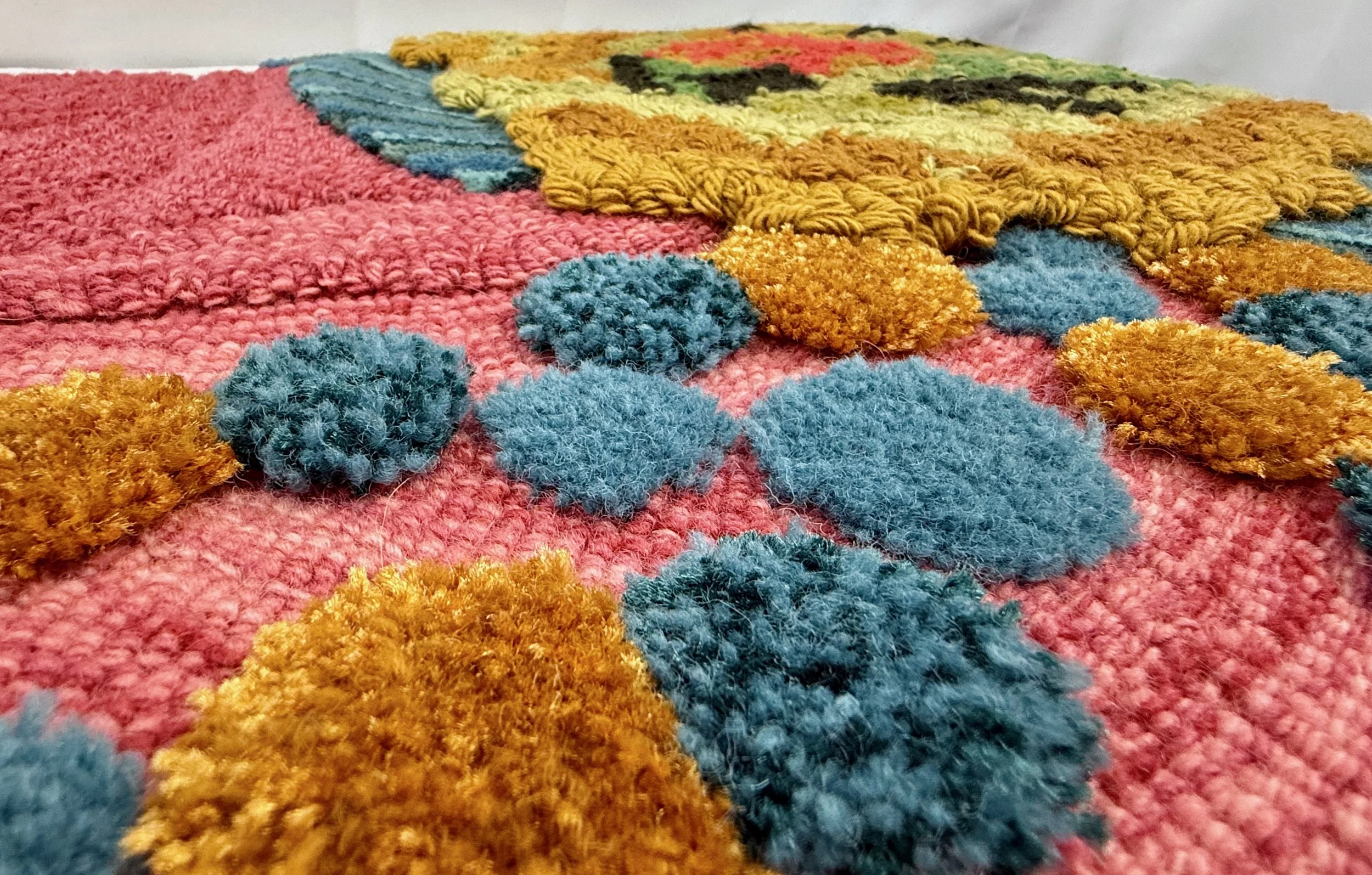
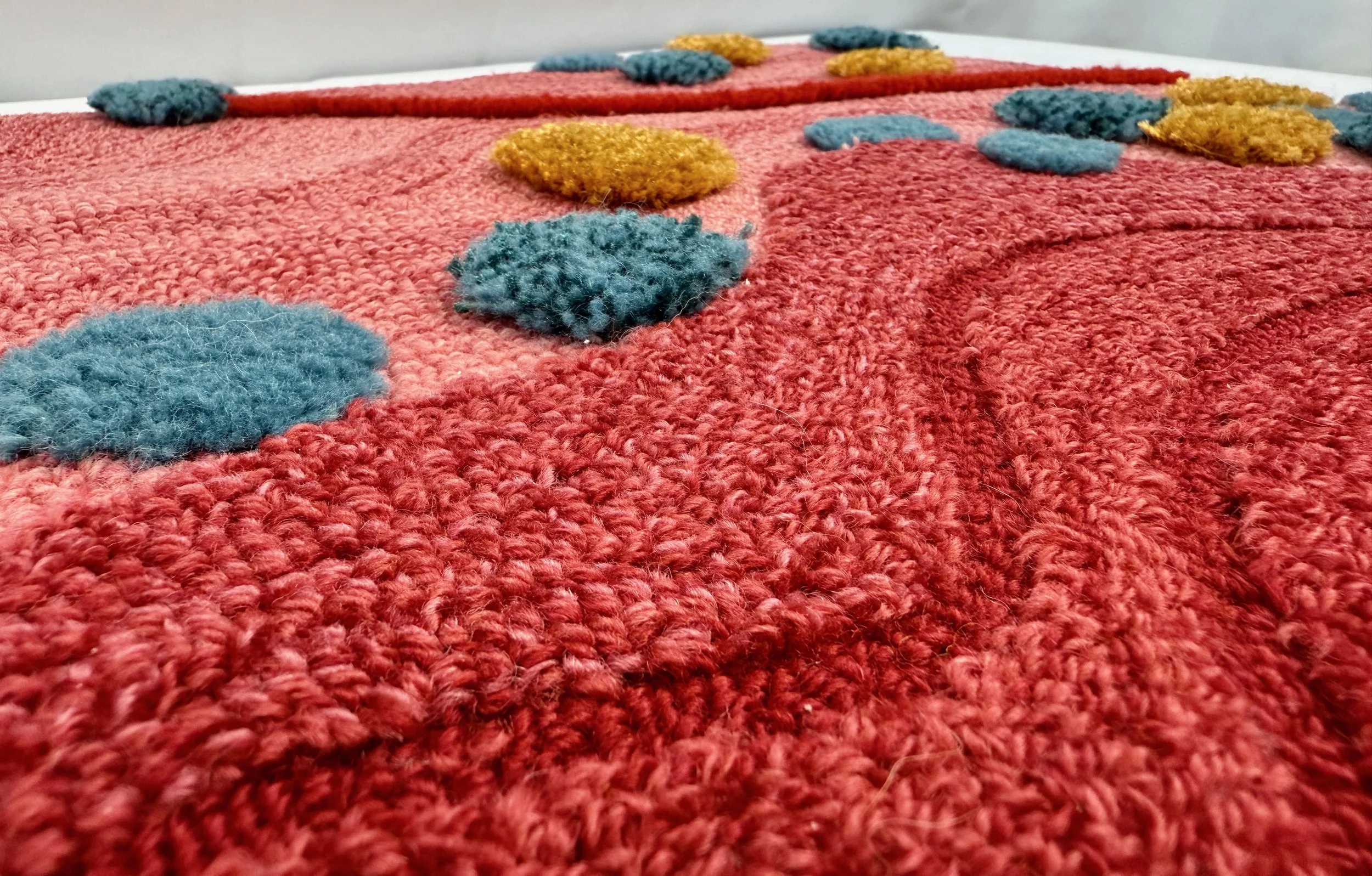
Look closely at the rejected samples. Visually, this iteration perfectly captured the raised, three-dimensional drama of Manoela's mixed-media embroidery. It was stunning. It was art.
But underfoot? In our attempt to mirror the delicate embroidery threads, the decorative loops were tufted too high and left too loose. In a high-traffic commercial setting—especially a crowded Met event—those loose loops catch on a heel.
We had to iterate. Our designers back-stepped, adjusting the specifications and lowering the pile height, finding balance between the raised embroidery, the structural integrity and the safety of walking on the rug.
*The pictured samples were specific to this project and cannot be duplicated or replicated.
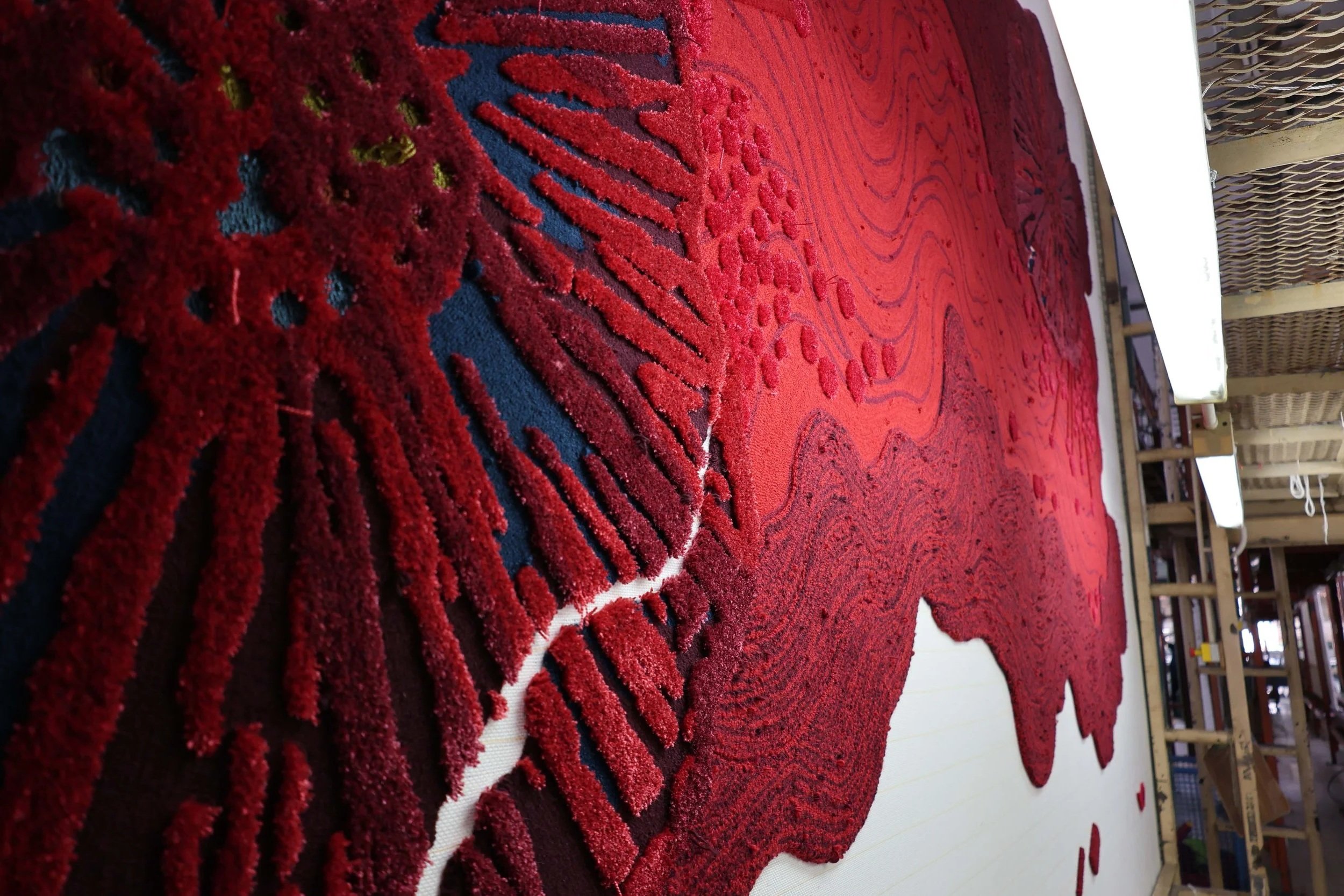
From Frame to Floor
Seeing the carpets on the frames reveals the human artistry behind this collection. Hand tufting is not a mechanized process; it is a highly specialized craft where every single line, curve, and texture is guided directly by a master artisan's hand.
Ultimately, creating a textile masterpiece can be a disciplined dance of trial and error. But when the perfect color harmony, the exact pile height, and the raw vision of an artist finally lock together, the result is something that transcends the floor beneath your feet. It becomes a part of the architecture, a part of the memory of the room.
We didn't just manufacture a rug. We brought a vision to life from nothing—and we did it at The Met.